
What Happens If You Delay a Root Canal and Wait Too Long
Waiting can make a treatable tooth harder to save. If an endodontist has diagnosed an infected tooth, arrange treatment as soon as reasonably possible. The answer to what happens if you delay a root canal depends on the infection and the tooth’s condition, but it can progress, cause swelling or an abscess, weaken the tooth, and eventually leave extraction as the only option.
It’s understandable to hope the pain will settle on its own. But pain may ease even while infection continues, so temporary relief doesn’t mean the tooth is healing. This guide explains how delay can affect pain, infection, nearby bone, and the chance of keeping your tooth. You’ll also learn which symptoms may point to a root canal, why treatment can become more involved over time, and when warning signs such as fever, facial swelling, trouble swallowing, or difficulty breathing need immediate attention. Knowing what to watch for can help you respond promptly and make an informed decision about care.
Key Takeaways
- Delaying treatment can weaken an infected tooth and may eventually make extraction necessary, so timely evaluation matters.
- Pain that fades doesn’t necessarily mean the infection is healing; infected dental pulp usually needs professional treatment.
- Notice symptoms such as lingering temperature sensitivity, pain when chewing, swelling, or a bad taste, and take them seriously.
- Fever, facial swelling, trouble swallowing, or difficulty breathing are warning signs that call for immediate attention.
What happens when you delay a root canal?
An infection inside a tooth can spread beyond the root and damage nearby tissues. Knowing what happens if you delay a root canal helps explain why an early dental assessment matters.
Early Tooth Sensitivity and Intermittent Pain
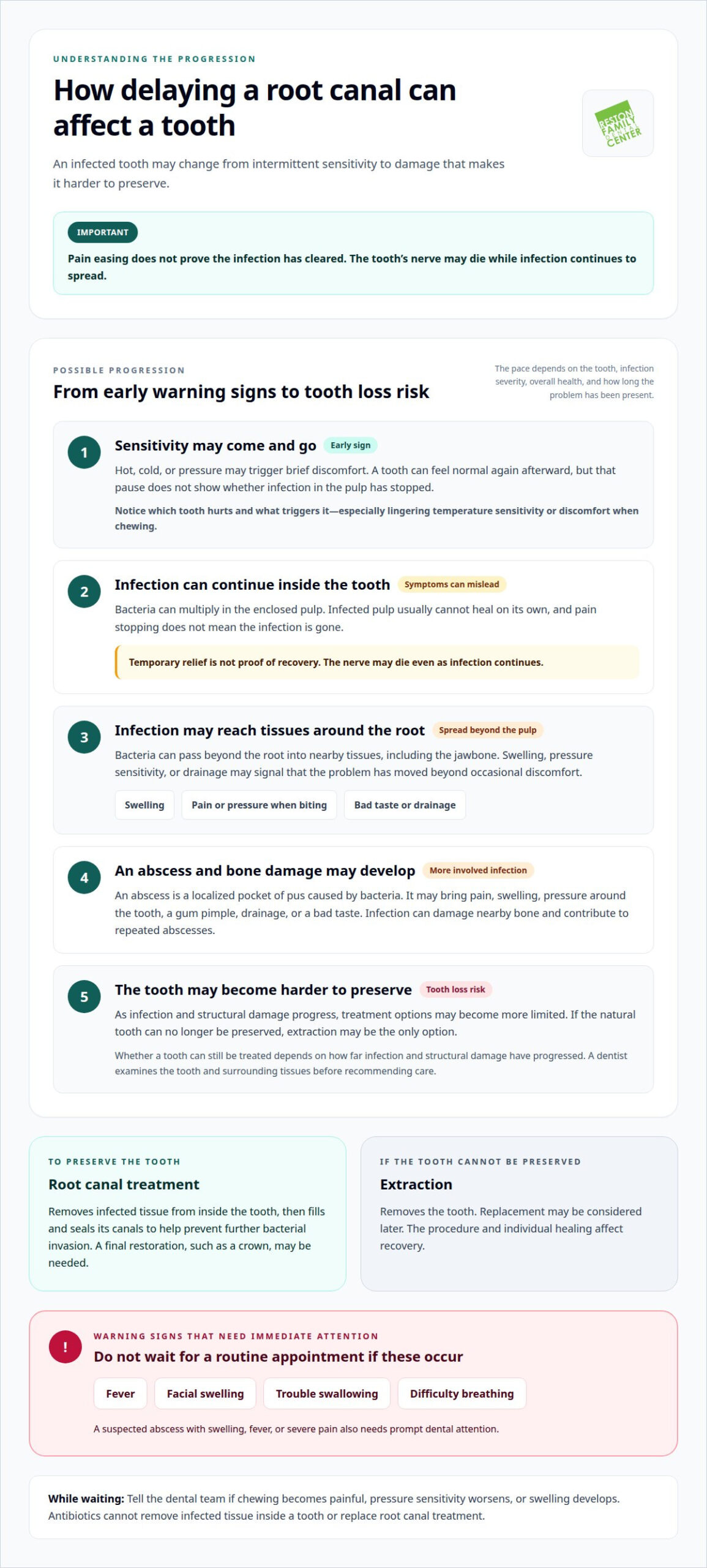
Early tooth sensitivity is discomfort triggered by hot, cold, or pressure that may come and go. For example, a tooth may hurt briefly with a cold drink, then feel normal again. That pause doesn’t show whether the infection in the pulp has stopped. If sensitivity lingers after the trigger ends or chewing becomes uncomfortable, tell your dentist. These changes can help assess the affected tooth.
Note which tooth hurts and what triggers the discomfort. A pattern of temperature sensitivity or pain when biting can help distinguish a developing problem from a brief twinge. Don’t take temporary relief as proof that the infection has cleared.
Tooth Loss and Supporting Bone Damage
Tooth loss becomes a risk if infection and structural damage progress until the natural tooth can no longer be preserved. Infection may reach the tissues around the root and, over time, contribute to bone loss, repeated abscesses, or damage that limits treatment options. Swelling, pressure sensitivity, or drainage can indicate that the problem goes beyond occasional discomfort.
A root canal removes infected tissue and seals the tooth, with the goal of preserving it. An extraction removes the tooth, and replacement may be considered later. Recovery differs because one treatment preserves the tooth while the other removes it. The procedure and individual healing affect recovery.
Preserving a Natural Tooth
Root canal treatment removes infected tissue from inside a tooth, then fills and seals its canals to help prevent further bacterial invasion. The aim is to keep the natural tooth rather than remove it. A final restoration, such as a crown, may be needed to restore the tooth. Treating the infection before severe damage develops can help avoid more involved care.
Whether a tooth can still be treated depends on how far the infection and structural damage have progressed. A dentist examines the tooth and surrounding tissues before recommending care.
Managing Pain While Waiting
A dentist can assess the source of pain, check for swelling or an abscess, and advise how to manage discomfort while treatment is arranged. Tell the dental team if chewing becomes painful, pressure sensitivity worsens, or swelling develops. These changes help them assess how the condition is progressing and whether care is urgent.
Antibiotics cannot remove infected tissue inside a tooth or replace root canal treatment. A dental professional can explain an appropriate plan for your symptoms, rather than relying on temporary pain relief alone. If facial swelling, fever, trouble swallowing, or difficulty breathing occurs, seek immediate attention.
Can the Infection Affect Your Overall Health?
Yes. An untreated tooth infection can spread from the pulp into tissues around the root, so changes in symptoms deserve attention.
Spread to the Jawbone and Surrounding Tissues
Infection can spread when bacteria pass beyond the tip of a tooth’s root into nearby tissue, including the jawbone. An abscess may form, causing pain, swelling, and pressure around the tooth. The National Institute of Dental and Craniofacial Research notes that an abscess from an infected tooth may cause pain, facial swelling, and fever.
These complications matter because infection can damage nearby bone and make the tooth harder to preserve. A tooth infection can also cause a bad taste or drainage near the gum. These changes may indicate that the problem has moved beyond sensitivity inside the tooth.
How Infection Can Worsen or Spread
Infection can worsen as bacteria multiply inside the pulp, which is enclosed by the tooth’s hard structure. The body’s immune system has difficulty eliminating infection in this enclosed space, and infected pulp usually cannot heal on its own. Tooth infections rarely improve without professional treatment.
How quickly the condition changes depends on the tooth, the severity of infection, your overall health, and how long the problem has been present. As treatment is delayed, infection may reach tissues around the root, while the tooth weakens and nearby bone deteriorates. Pain stopping doesn’t prove recovery: the tooth’s nerve may die even as the infection continues to spread.
Urgent Care for a Suspected Infection
Seek immediate attention for fever, facial swelling, trouble swallowing, or difficulty breathing. These symptoms may signal a worsening infection that needs urgent assessment, not a routine appointment. A suspected abscess with swelling, fever, or severe pain also needs prompt dental attention.
Tell a dental professional about symptoms such as a bad taste, pressure when biting, or swelling, even if pain has eased. An assessment can identify signs of infection and guide the next step. Emergency dental care is appropriate when urgent symptoms arise; emergency dental care can help address urgent dental problems.
Signs and symptoms that may indicate a need for a root canal
Symptoms can point to infection or damage inside a tooth, but they can’t confirm the cause by themselves. Watch for changes such as lingering sensitivity, pain when chewing, swelling, or visible tooth damage.
Dental Abscess Formation
A dental abscess is a localized pocket of pus caused by bacteria infecting tissue around a tooth. It may develop when bacteria enter through deep decay, a crack, trauma, or a failing filling. The resulting infection can affect the tooth’s pulp and tissues near its root.
A gum pimple near a tooth’s base, drainage, or a bad taste may accompany an abscess. These signs matter because infection can extend beyond the tooth’s interior. A dentist can examine the tooth and surrounding gum tissue to identify the source and determine whether root canal treatment is appropriate.
Abscess Symptoms and Risks
An abscess may cause severe throbbing pain, tenderness when biting, gum or facial swelling, and fever. Some people also notice swollen lymph nodes or difficulty opening the mouth comfortably. Symptoms can vary, and pain that eases doesn’t establish that the infection has resolved.
Other signs that may warrant assessment include prolonged sensitivity to hot or cold, pain when chewing, darkened gums, and visible tooth damage. A tooth may also discolor from the inside as its pulp becomes damaged. Whitening toothpaste won’t correct this internal change, so report discoloration along with other symptoms.
Emergency Signs of Tooth Infection
Fever, facial swelling, trouble swallowing, or difficulty breathing are emergency warning signs that require immediate attention. Don’t wait for routine care if breathing or swallowing becomes difficult. Prompt attention matters because these symptoms can accompany an infection spreading beyond the tooth.
Severe throbbing pain, swelling, fever, or a gum pimple with drainage also calls for prompt dental assessment. Describe when symptoms began and whether they’re worsening, such as swelling spreading across the face or increasing discomfort when you bite. This information helps the dental professional assess the suspected infection and guide care.
Worsening pain and discomfort when treatment is delayed
As infection or inflammation inside the tooth progresses, discomfort can shift from occasional sensitivity to persistent throbbing. Chewing may become painful, and pressure or swelling can make daily activities harder. Pain that suddenly eases doesn’t necessarily mean the infection has resolved. Changes in the tooth’s nerve can reduce pain while the underlying problem continues.
Delaying treatment can also affect the care needed to save the tooth. Infection may lead to an abscess, weaken the tooth, or damage surrounding bone. If the tooth becomes too damaged to preserve, extraction and later tooth replacement may be considered. Each added complication can make treatment more involved and may increase overall costs. Early root canal treatment aims to remove infected tissue, clean and seal the tooth, and improve the chance of keeping it.
Antibiotics don’t remove infected tissue from inside a tooth, so they don’t replace root canal treatment. A dentist considers your symptoms and the tooth’s condition when recommending care. If pain worsens while you wait or swelling develops, contact a dental professional promptly rather than relying on temporary relief.
Persistent tooth pain can disrupt sleep, concentration, work, and everyday tasks. For example, pain when biting may make eating difficult, while throbbing can interrupt rest. During your dental assessment, describe changes such as longer-lasting sensitivity, pain when chewing, or new swelling. These details help the dentist understand how the problem has progressed and plan care for the tooth’s condition.
Prompt evaluation after an infection diagnosis can help address the source before further damage limits options. Schedule an assessment for root canal treatment to discuss the tooth and the next step in care.
Reston Family Dental Center: Root Canals
Reston Family Dental Center provides root canal treatment for infection inside a tooth, with the goal of preserving it. If a dentist has diagnosed an infection, or you have persistent tooth pain, sensitivity, or swelling, an assessment can clarify the tooth’s condition and appropriate next steps.
During an evaluation, the dental team considers your symptoms and the extent of damage to determine whether root canal treatment is suitable. Prompt care can address the source of infection before further damage affects the tooth. If the tooth cannot be preserved, the dentist can discuss options based on your needs.
To talk about your symptoms and care, contact Reston Family Dental Center.
Take the Next Step With Confidence
Understanding what happens if you delay a root canal can help you make an informed decision, but an online guide can’t assess your individual tooth. A dental evaluation lets you discuss the examination findings, which options fit your situation, and what to expect from care. You can also explain your main concerns, whether they involve discomfort, uncertainty about the procedure, or the effect on daily life.
You don’t need to have every answer before starting the conversation. Describe the changes you’ve noticed and ask for a clear explanation of the recommended next step. Understanding the condition of your tooth can make the decision feel more manageable.
Contact Reston Family Dental Center to discuss your dental care. Taking that first step can help you move forward with greater confidence.
Frequently Asked Questions
How long can I safely wait before getting a root canal?
There’s no single safe waiting period. The tooth’s condition, infection severity, and your overall health affect how the problem progresses. After a dental professional diagnoses an infected tooth, arrange treatment as soon as reasonably possible. If you’re asking what happens if you delay a root canal, the concern is that infection may worsen while you wait. Patients in Reston, Great Falls, Ashburn, Chantilly, Herndon, and Vienna should discuss timing promptly with a dental professional.
Can a tooth infection spread to other areas if left untreated?
Yes. Bacteria can move beyond the tooth’s root and affect the jawbone or nearby tissues. How quickly this happens varies with the infection, tooth condition, overall health, and how long the problem has been present. Seek immediate attention for fever, facial swelling, trouble swallowing, or difficulty breathing. These warning signs call for urgent care, not simply watching symptoms at home.
Can A Tooth Infection Go Away Without A Root Canal?
An infection inside the pulp usually won’t resolve without professional treatment. The pulp is enclosed by the tooth’s hard structure, making it difficult for the immune system to clear the infection. A root canal may be recommended to treat the affected tooth, while severe structural damage can change the available options. An examination helps determine appropriate treatment instead of relying on symptoms alone.
Can You Wait If the Pain Goes Away?
No, pain relief doesn’t prove the infection has healed. The tooth’s nerve can die, reducing pain even as infection continues. For example, a tooth that stops throbbing may still have an active infection beneath its surface. Continue with the assessment or treatment plan, and tell the dental professional if the pain has changed or disappeared. This detail helps explain how your symptoms have developed.
Can antibiotics replace a root canal?
No. Antibiotics can’t remove infected tissue from inside a tooth, so they don’t replace root canal treatment. If an antibiotic is prescribed, use it only as directed and follow the dental care recommended for the infection. For example, less swelling after medication doesn’t establish that the source inside the tooth has been treated. Follow the dental treatment plan even if symptoms improve.
Could You Lose the Tooth?
Yes. If infection and structural damage progress too far, extraction may be necessary because the tooth can no longer be saved. Timely treatment can improve the chance of preserving it. If removal is required, discuss replacement options based on your needs, such as dental implants or implant-supported dentures. The condition of the tooth and surrounding bone helps guide that discussion.