Dental Implant Specialist in Ashburn for Single-Tooth Implants
A dental implant replaces a missing tooth’s root with a titanium post placed in the jawbone, which can support a crown. A dental implant specialist in Ashburn can assess whether your jawbone and oral health are suitable and explain the treatment steps.
It’s natural to wonder whether an implant is right for you, how long healing takes, and how to care for it. Jawbone health matters because the post needs to integrate with the bone, a process that takes several months.
This guide explains what a single-tooth implant is, how candidacy is assessed, and what to expect during placement and healing. You’ll also learn about implant lifespan and maintenance, so you can make a more informed decision about the process and ongoing care.
Key Takeaways
- Learn how a single-tooth implant is planned to replace a missing tooth and what the restoration process involves.
- Understand how jawbone health and personal health factors can influence implant candidacy and treatment planning.
- Get a clearer picture of placement and healing, including the factors that shape your recovery.
- Discover how consistent oral care supports implant maintenance and what to consider when planning for long-term use.
Single-tooth implants
A single-tooth implant replaces one missing tooth with a post in the jawbone and a crown above it. The post supports the replacement tooth, restoring function and stability without relying on neighboring teeth. Planning begins with an appointment to review the gap, oral health, medical history, and treatment goals.
Wisdom tooth removal differs from replacing a missing visible tooth. Wisdom teeth are third molars, and their removal addresses a tooth that needs extraction; an implant restores a gap when replacement is appropriate. The location and purpose of the missing tooth help shape the treatment discussion.
Patients in Ashburn may encounter general dentists, periodontists, and oral and maxillofacial surgeons who provide implant care. A periodontist may be considered for missing or loose teeth, bleeding gums, gum recession, failing teeth, moving dentures, or a dentist’s referral. Ratings alone don’t offer a reliable comparison; look for recurring review themes such as communication, comfort, and follow-up.
A referral isn’t the only route to explore care: patients may consider seeing a periodontist directly for the concerns above. Qualifications to review include relevant implant training, experience with treatment planning, and coordination of the final restoration. Board certification and fellowship training are different credentials; use their exact names when comparing professional backgrounds. The Ashburn area includes clinicians with advanced implant training, but a complete roster or verified rating comparison isn’t available here.
Single-tooth implants address one tooth, while All-on-4 refers to a different treatment category; bone grafting is a separate procedure. Ask what each proposed step is intended to address. Insurance acceptance, financing, free consultations, and same-day appointments vary by practice, so don’t assume they’re included. Patients taking bisphosphonates may face a higher risk of implant failure, according to MDPI, making medication history relevant to treatment planning.
Implant candidacy and jawbone density
Age and jaw development both matter when planning an implant procedure. Candidates generally need to be at least 18 years old, with a fully developed jaw. A dentist also considers the missing tooth’s location, the condition of nearby teeth, and overall oral health. In Loudoun County, these details help shape whether an implant or another option, such as a bridge, fits the treatment goal.
Jawbone density matters because the implant post needs bone support. Before planning surgery, the dentist assesses the available bone around the gap, including its height and width. If bone has reduced after tooth loss, the site may not provide enough support for the planned implant. The amount and location of available bone help determine whether treatment can proceed as planned.
Bone grafting may be considered when additional support is needed. It adds a planning step because the graft must heal before the next stage. The decision depends on the bone at the implant site and the treatment plan, not simply on the fact that a tooth is missing. A bridge may also be discussed when an implant isn’t suitable for the site or your goals.
Medical history is another part of candidacy. For example, patients taking bisphosphonates may have a higher risk of implant failure, so medication information is relevant to planning. Share health changes and medications during the assessment, and mention previous dental procedures affecting the area. A clear review helps the dentist weigh bone support, oral health, and the intended restoration together. Review implant candidacy and jawbone health as part of understanding your options.
Implant lifespan and maintenance
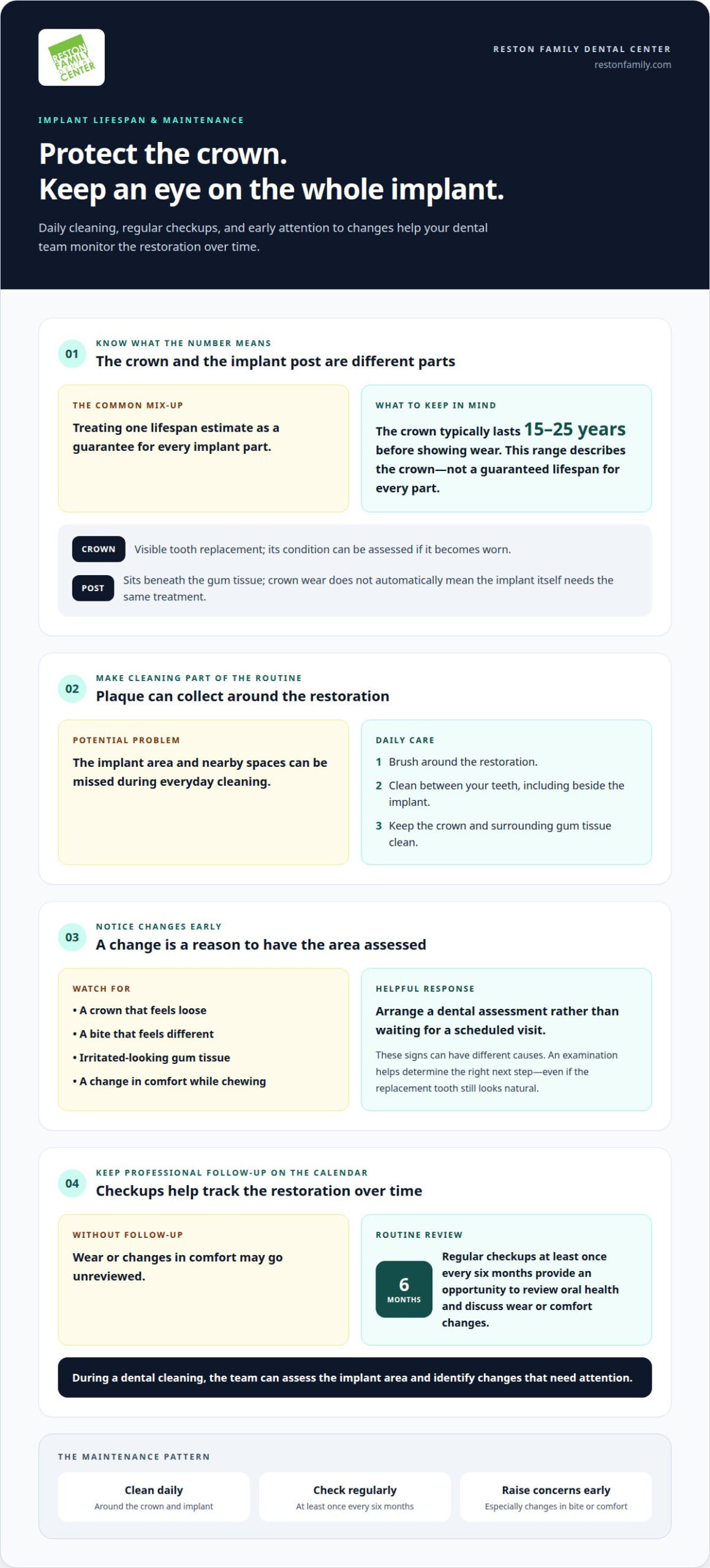
A dental implant has parts with different roles, so its lifespan isn’t one single number. The crown is the visible tooth replacement, while the implant post sits beneath the gum tissue. Crowns typically last 15-25 years before showing wear. That range describes the crown, not a guaranteed lifespan for every part of the implant. Your chewing habits, oral care, and the condition of surrounding teeth all affect how the restoration holds up.
Keep the crown and surrounding gum tissue clean as part of your daily routine. Brush around the restoration and clean between your teeth, including beside the implant, where plaque can collect. During a dental cleaning, the team can assess the implant area and identify changes that need attention. Regular checkups at least once every six months provide an opportunity to review your oral health and discuss wear or changes in comfort.
Pay attention to changes instead of waiting for a scheduled visit. If the crown feels loose, your bite feels different, or the gum tissue looks irritated, arrange a dental assessment. These signs can have different causes, so an examination helps determine the right next step. Mention any change in comfort while chewing, even if the replacement tooth still looks natural.
A single implant replaces one missing tooth, while an implant-supported denture serves a different need when several teeth require replacement. Both options need consistent cleaning and professional follow-up. Good maintenance also supports nearby teeth and gums, which contribute to a stable, comfortable bite. If a crown becomes worn, its condition can be assessed and replacement considered without assuming the implant itself needs the same treatment.
Implants can restore a gap without a removable denture, while a well-planned crown can blend with surrounding teeth. The goal is practical as well as aesthetic: support chewing and preserve a natural-looking smile and facial appearance. Keep follow-up appointments, maintain daily cleaning, and raise concerns early. These steps help the dental team monitor the restoration and respond to changes over time.
Implant placement and healing
In Virginia, implant placement involves surgery to position a post in the jawbone. The plan accounts for the missing tooth, available bone, and any need for grafting.
Implant Placement
The dental team first plans where the post should sit and assesses the site. During surgery, a titanium post is placed in the jawbone to support the replacement tooth. If bone loss affects support, grafting may be included in the treatment plan. Ask what each planned step addresses and how it relates to your missing tooth.
Healing, Risks, and Success Rates
After placement, the implant integrates with the bone over several months. This healing period matters because the bone needs to support the implant before the next restorative step. The timeline depends on the treatment plan and how the site heals. Follow care instructions and attend scheduled reviews so the team can assess progress.
Implant risks include failure, and assessment considers bone support, health history, and the surgical site. One study reported that 58 implants placed in diabetic patients and immediately loaded had no failures after a mean follow-up of 42 months, according to the National Center for Biotechnology Information. That finding describes those implants and that follow-up, not a general success rate for every patient.
During healing, report changes such as increasing discomfort or concerns around the surgical site to the dental team. The team can assess the area and decide whether the healing plan needs attention. A careful discussion of bone loss, grafting, and the restoration sequence helps you understand what to expect at each stage. Discuss your dental implant treatment plan.
Loudoun Oral and Maxillofacial Surgery explains that dental implants are titanium posts surgically placed in the jawbone. Integration with the bone takes several months before restorative treatment proceeds.
Reston Family Dental Center: Dental Implants
Reston Family Dental Center can discuss dental implants when you’re considering a fixed replacement for a missing tooth. An evaluation helps connect your goals and oral health with the treatment plan, including whether an implant-supported denture better suits multiple missing teeth. If tooth pain or damage is part of the picture, root canal treatment may also be relevant; dental cleaning supports ongoing oral care.
Bring questions about jawbone support, healing, the restoration, and long-term maintenance to your appointment. Understanding how each step fits your needs can help you make a considered decision without rushing into treatment. Contact Reston Family Dental Center to discuss dental implants and your next steps.
Take the Next Step Toward a Personalized Plan
You don’t have to choose a procedure right away. Start by identifying what you want a tooth replacement to do in everyday life, from feeling comfortable while chewing to fitting naturally with your smile. Those priorities give your dental appointment a useful focus and help you understand how each option aligns with your needs.
A dental implant specialist in Ashburn can discuss your goals, evaluate your oral health, and explain the considerations behind a treatment plan. Bring up anything that could affect your decision, including concerns about healing, appearance, or ongoing care. Clear answers can help you move forward at a pace that feels right for you.
When you’re ready to discuss your options, contact Reston Family Dental Center. A thoughtful conversation is a practical first step toward deciding what comes next.
Frequently Asked Questions
What Is a Dental Implant?
A dental implant combines a post placed in the jawbone with a restoration that fills the visible gap. Unlike a removable denture, it stays fixed once restored. Reston Family Dental Center provides in-house implant placement and restoration, coordinating treatment planning and the replacement tooth as part of one care process.
Who Is a Good Implant Candidate?
A good candidate generally has a fully developed jaw and enough bone to support an implant. A dental implant specialist in Ashburn also considers oral health, medical history, and whether daily cleaning can be maintained. According to MDPI, patients taking bisphosphonates may have a higher risk of implant failure. Reston Family Dental Center serves patients in Reston, Great Falls, Ashburn, Chantilly, Herndon, and Vienna.
What is the dental implant procedure and recovery timeline?
The process begins with an assessment and treatment plan, followed by surgical placement of the implant post. Bone integration takes several months; the restoration is then completed according to the planned sequence. If treatment includes grafting, that affects the steps and timing. Healing varies with the site and treatment plan, so follow-up visits help the dental team assess progress before restoration.
How do patient reviews and ratings compare for implant specialists in Ashburn?
Ratings alone don’t provide a reliable head-to-head comparison. Look for recurring review themes, such as communication, comfort, and follow-up.
Who are the dental implant specialists in Ashburn, VA?
Patients in Ashburn may encounter general dentists, periodontists, and oral and maxillofacial surgeons who provide dental implant care. A periodontist may be considered for missing or loose teeth, bleeding gums, gum recession, failing teeth, moving dentures, or a dentist’s referral.
What dental implant services do Ashburn specialists offer, including All-on-4 and bone grafting?
Single-tooth implants replace one missing tooth, while All-on-4 is a different treatment category. Bone grafting may be considered when additional bone support is needed; insurance acceptance and financing vary by practice.