Cracked Molar Repair in Vienna for Chewing Pain
Molar pain while chewing is a reason to stop using that side, not to test the tooth with another bite. For cracked molar repair in Vienna, prompt dental care can help identify the damage before it worsens, even if the pain comes and goes.
Until your appointment, rinse gently with warm water, apply a cold compress to the outside of your cheek, and avoid chewing on the affected side. If a piece has broken off, save it and bring it with you. These steps may offer temporary comfort, but a dentist needs to assess the tooth and determine treatment.
A dentist will assess the tooth and recommend treatment based on how far the crack or break extends. This guide explains what to do before your visit, which symptoms need urgent attention, when same-day care may be possible, and how fillings, crowns, root canal treatment, or other care may be used for cracked, chipped, or broken teeth.
Key Takeaways
- Rinse gently with warm water, save any broken pieces, use a cold compress, and avoid chewing on the affected side until you’re seen.
- Facial swelling that affects breathing or swallowing, uncontrolled bleeding, or a serious face injury calls for emergency help.
- Treatment depends on the crack’s depth and may involve a filling, crown, root canal, or, if the tooth can’t be saved, extraction.
- Because pain can come and go and cracks may be hard to see, an early dental assessment can help identify the problem and guide care.
First aid for a broken, cracked, or chipped tooth
After tooth damage, protect the area and arrange dental care promptly. Rinse away debris, save any fragments, and avoid biting with the affected tooth.
Immediate Care for Tooth Damage
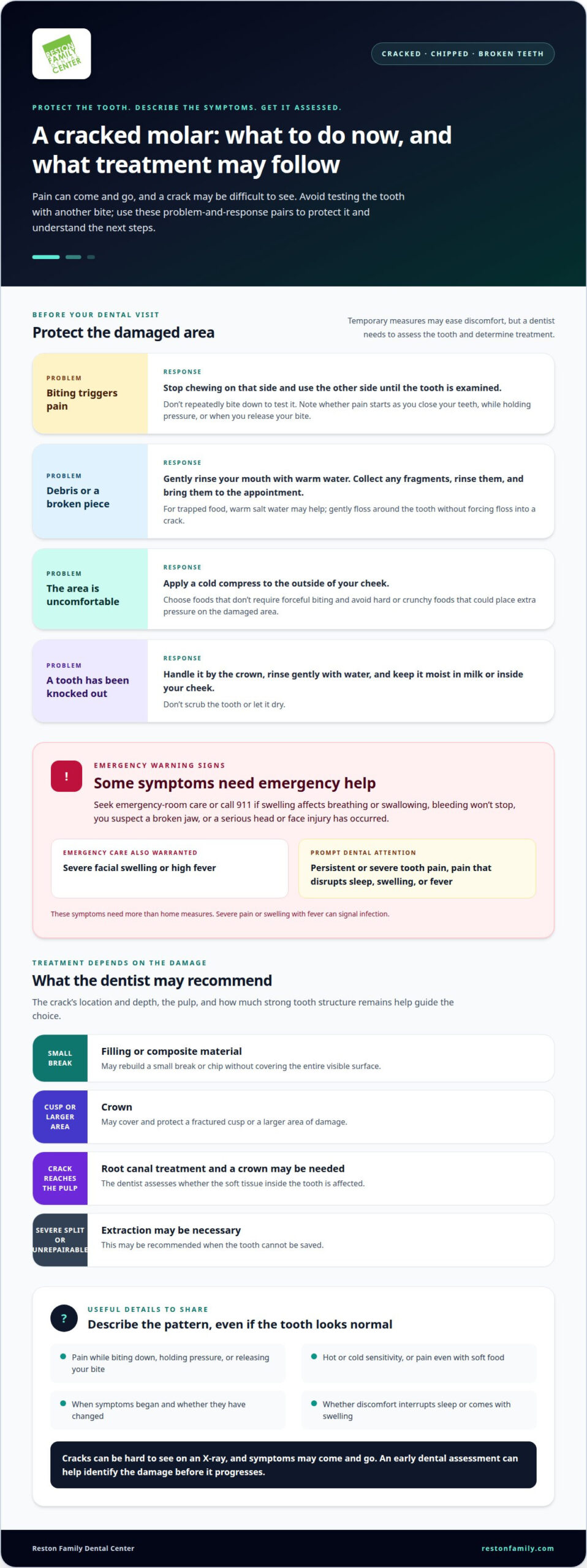
Gently rinse your mouth with warm water, then collect any broken pieces and rinse them too. Apply a cold compress to your cheek to ease discomfort, and chew on the other side until a dentist examines the tooth. For a toothache, warm salt water may help dislodge trapped food; gently floss around the tooth without forcing the floss into a crack. If a tooth has been knocked out, handle it by the crown, rinse it gently with water, and keep it moist in milk or inside your cheek. Don’t scrub it or let it dry.
Signs Requiring Emergency Care
A cracked tooth that hurts needs prompt dental attention, especially if pain persists or disrupts sleep. Severe pain, swelling, or fever can signal infection. In Vienna, seek emergency-room care or call 911 if swelling affects breathing or swallowing, bleeding won’t stop, you suspect a broken jaw, or a serious head or face injury occurred. Severe facial swelling or high fever also warrants emergency care. These symptoms need more than home measures.
Treatment for Cracked or Broken Teeth
A dentist examines the damage and chooses treatment according to the crack’s location and depth. Cracks can be difficult to see on X-rays, and symptoms may come and go, so describe when biting causes pain or sensitivity. A small break may be repaired with a filling or composite material; a fractured cusp may need a crown. If the crack reaches the pulp, root canal treatment and a crown may be needed. A severe split or unrepairable fracture may require extraction. Prompt assessment can help treat the tooth before the damage progresses.
Care for cracked, chipped, or broken teeth
Treatment depends on whether the damage affects only the outer surface or extends deeper. The size of a chip, the crack’s location, and changes in symptoms help guide the next step.
Emergency Care for Damaged Teeth
An emergency dentist can assess damage that causes ongoing pain, swelling, or difficulty chewing. Describe when symptoms began, whether pain occurs while biting or releasing pressure, and whether the tooth’s condition has changed. These details can help distinguish a surface chip from a crack that may involve deeper tissue. Severe pain or swelling with fever can point to infection and needs prompt attention.
Bonding and Crown Treatment
For a small chip or limited break, a dentist may use composite material to rebuild the missing area. Bonding can restore the tooth’s shape without covering the entire visible surface. A fractured cusp or larger area of damage may need a crown to cover and protect the remaining tooth. The right option depends on how much strong tooth structure remains and whether the pulp is affected.
Care for Broken or Chipped Teeth
Until the tooth is assessed, avoid hard or crunchy foods that could place extra pressure on the damaged area. Note any changes, such as new temperature sensitivity, pain during meals, or swelling near the tooth. Save any pieces for your appointment, as they can help show how the tooth broke. A crack may be difficult to see on an X-ray, so a clear description of your symptoms also matters.
If pain or swelling makes prompt assessment important, emergency dental care can help address a damaged tooth and determine the appropriate treatment.
Pain while chewing or biting
A cracked molar can cause a sharp burst of pain when you bite down or release pressure. The discomfort may appear during a meal, fade afterward, then return when you chew on that side. Hot or cold sensitivity can accompany the pain. Because symptoms can come and go, a dental assessment may be needed to identify the tooth. Avoid testing it with repeated bites; note what triggers the pain instead.
Track the pattern before seeing a dentist. Does pain begin as you close your teeth, while you hold pressure, or when you release your bite? Note whether chewing soft food also hurts, whether temperature causes sensitivity, and whether discomfort interrupts your sleep. These details can help explain the problem even when the tooth looks normal. A small crack may be hard to see on an X-ray, so intermittent symptoms still deserve attention.
Arrange urgent dental care if tooth pain persists, keeps you awake, or comes with swelling or fever. These symptoms can signal infection rather than an isolated surface chip. Severe facial swelling, especially with difficulty breathing or swallowing, needs emergency care. Until you’re assessed, chew on the opposite side and choose foods that don’t require forceful biting. Don’t ignore pain simply because it settles between meals.
A dentist assesses the crack’s extent and whether the pulp is involved before recommending a restoration. A limited break may be repaired with composite material, while a damaged cusp may need a crown. If the crack reaches the pulp, root canal treatment and a crown may be necessary. A tooth that cannot be repaired may require extraction. The right option depends on the crack’s location and depth, as well as the healthy structure that remains, not pain alone. Prompt assessment can clarify the cause and help prevent further damage.
Benefits of early intervention
A dental assessment soon after a crack appears can identify its location and depth before chewing forces worsen it. A crack may extend through the tooth, making the damage harder to repair. Even if discomfort fades, symptoms can return because the crack remains. Describe when pain starts, such as when biting down or releasing pressure, so the dentist can assess the pattern alongside the tooth’s condition.
Early care also matters when a crack reaches the pulp, the soft tissue inside the tooth. Pulp inflammation or infection can develop, and infection may spread into nearby gum or bone. As damage advances, treatment may become more involved. Prompt assessment helps determine whether the pulp is affected and what care is appropriate, rather than waiting for stronger pain to make the problem obvious.
Some cracks threaten the tooth’s ability to remain in place. A vertical root fracture may be discovered late and can require extraction. Unlike a broken bone, a fractured tooth root will not heal on its own. A crack can also worsen or separate even after treatment, so early diagnosis gives the dentist a clearer opportunity to assess the remaining structure and explain the likely options.
Pay attention to changes, not just pain intensity. Arrange an assessment if biting discomfort returns, temperature sensitivity develops, or a visible chip grows into a longer line. Mention whether the tooth has a large filling or previous restoration, since these details help explain its condition. Keep chewing pressure off the tooth while arranging care, and don’t use repeated bites to test whether the crack has improved.
For cracked molar repair in Vienna, Virginia, schedule a dental assessment so the tooth can be examined and the next step selected before damage progresses.
Reston Family Dental Center
Reston Family Dental Center provides emergency dental work for patients with a cracked or broken tooth who need an assessment and treatment plan. The dentist can evaluate the damage, explain whether the tooth may need a crown or root canal, and recommend care based on its condition. Same-day dental crowns and root canal treatment are available when clinically appropriate.
If chewing pain, a visible crack, or swelling is affecting you, contact Reston Family Dental Center to discuss your concern and next steps.
Take the Next Step Toward Comfortable Chewing
Have the painful tooth assessed before it changes how you eat or rest. A clear description of when discomfort starts can help the dentist understand your symptoms and discuss a suitable path forward. For cracked molar repair in Vienna, the next step is an individual examination, followed by a treatment plan based on the tooth’s condition.
You don’t need to decide on a restoration before your visit. Use the appointment to discuss the findings, understand the options, and consider what may help protect your comfort and oral health. If the pain is worsening or disrupting sleep, don’t put off arranging care.
Contact Reston Family Dental Center to discuss your concerns and arrange your next step. With a clear assessment, you can move forward with more confidence and a plan suited to your tooth.
Frequently Asked Questions
How can I manage discomfort before my appointment?
Choose soft foods that need little chewing, and avoid very hot or cold items if they trigger sensitivity. Rinse gently after meals to keep food from packing around the tooth. If the pain changes, note whether it starts with pressure, temperature, or at rest. This record can help the dentist distinguish a crack from other causes, such as decay or a loose restoration.
Why Do Teeth Crack?
Teeth can crack when chewing forces or an impact put more stress on them than they can withstand. Biting hard objects, such as ice or unpopped popcorn kernels, can contribute. Teeth grinding can also cause broken teeth, increased sensitivity, and damage to fillings, according to the NHS. A crack may start small, so a new sharp sensation while eating is a reason to arrange an assessment.
Will I be seen the same day?
Reston Family Dental Center offers same-day emergency appointments for concerns such as tooth pain, chips, infections, or dental trauma. An appointment allows the team to assess the problem and determine the appropriate next step. Whether treatment can also be completed during that visit depends on the tooth’s condition and the care required. Patients in Vienna and nearby communities can contact the practice about urgent concerns.
What are the symptoms and causes of a cracked molar?
A cracked molar may cause sharp pain when biting, discomfort when releasing pressure, or sensitivity to temperature. Symptoms can come and go, and a visible line may not appear. Causes include biting hard foods or objects, an impact, and grinding or clenching. For example, pain that occurs only when chewing on one side can help the dentist locate the affected tooth.
How urgently should a cracked molar be treated?
Arrange dental attention promptly when a molar hurts during chewing, even if the pain settles between meals. A crack can progress and may affect the tooth’s pulp, increasing the risk of infection. Severe facial swelling, difficulty breathing or swallowing, or bleeding that won’t stop requires emergency-room care or a call to 911. Fever with swelling also calls for prompt attention.
What treatments are available for a cracked molar, and how do they compare?
A limited break may be restored with composite material, while a fractured cusp or larger damaged area may need a crown for coverage. If the crack involves the pulp, root canal treatment may be followed by a crown. A tooth with a severe, unrepairable fracture may require extraction. The dentist considers the crack’s depth and location, along with the healthy structure that remains, to select an appropriate option.